
Hydrogen Infrastructure for Aviation - Market and Technology Forecast to 2033
Market forecast by Region and Infrastructure Components. Technologies and Market Overview, Country Analysis, Growth Scenario, and Leading Companies
Market forecast by Regions, Aircraft type, and Ownership type. Country Analysis, Market and Technology Overview, Critical Raw Materials, Opportunity Analysis, and Leading Company Profiles

Business Jets or private jets, are aircraft designed for transport of small groups of people in conditions that offer more comfort, privacy, convenience and speed compared to commercial airliners. Additionally, they offer customisability to the end users to have bespoke cabins, fitted with interiors, layout and in-flight technology to suit their style and needs of travel.
It is due to this exclusive set of features, business jets are mainly used by VIPs, High Net Worth Individuals (HNWIs), business executives, and high-ranking government officials. These end users can either privately own the aircraft or hire it for a specific journey from a charter service provider or even own a part of the entire aircraft via fractional ownership.
The aircraft are available in various types to suit the end user needs of capacity and range, namely very light and light (light), midsize and super midsize (medium), long and ultra-long range (large), business liners (bizliners).
The market players include large as well as mid to small sized companies with expertise in manufacturing.
Business jets market is situated as a significant part of the aviation industry. It reflects economic strength, technological sophistication and evolving air travel needs amongst the affluent and VIP class. The increasing global wealth and high net-worth individuals (HNWIs) are estimated to generate considerable demand for business jets. Additionally, the growth of access models, with charter fleets and fractional ownership making it easy for individuals to use business jets without fully owning it, is also estimated to facilitate growth and break the entry barrier for new users to enter the market.
Due to the post-pandemic uptick in global travel, tourism and expansion of businesses overseas, there has been a surge in demand for efficient long-range large business jets. This has led to OEMs working on new large jet models to meet the market demand trend.
OEMs are also focusing their efforts on expanding the service availability due to the international nature of their customers and to provide a robust ecosystem of services across the world.
The market technologies revolve mainly around sustainable aviation, smartification of cabin and cockpit, Artificial intelligence (AI) and machine learning (ML) deployment to improve maintenance, repair and overhaul (MRO) processes.
These technological innovations will drive the spending in the market as they make the business jets more efficient to own and operate.
The report “Business Jets - Market and Technology Forecast to 2033” examines, analyses, and predicts the evolution of business jets technologies, markets, and outlays (expenditures) over the next 8 years – 2026-2033 in the aerospace industry. It also examines markets geographically, focusing on the top 95% of global markets, in the North America, Europe, Asia Pacific, Middle East & Africa, and Latin America.
Throughout the report we show how business jets are owned and operated today to add real value, as well as how will they can evolve in the near and distant future. To provide the most thorough and realistic forecast, this report considers all stated and derived scenarios.Covered in this study
Complete the form below and we will send sample pages for this study. Please use a business email address.
Explore additional studies connected to this study.
Market forecast by Region and Infrastructure Components. Technologies and Market Overview, Country Analysis, Growth Scenario, and Leading Companies

Market forecast by Region, Pathway, and Platform. Country Analysis, Market and Technology Overview including Supply Chains, Opportunities and Scenario Analysis, and Leading Company Profiles
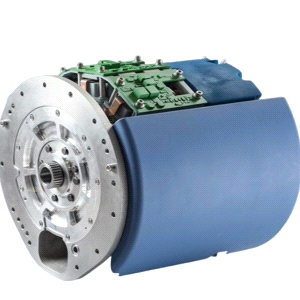
Market forecast by Region, Powertrain System, and End-User. Country Analysis, Market and Technology Overview including Supply Chains and Critical Raw Materials and Technologies, Opportunities and...
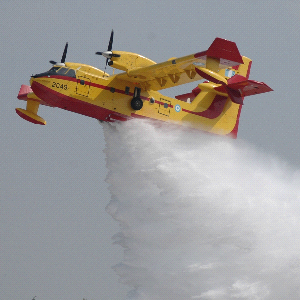
Market forecast by Region, Aircraft Type, and Fitment. Country Analysis, Market and Technology Overview including Supply Chains and Critical Raw Materials, Opportunities and Impact Analysis, and...
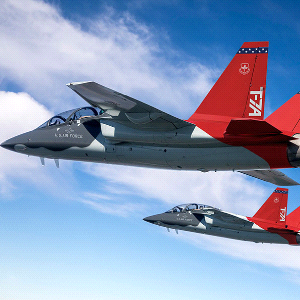
Market forecasts by Propulsion, Aircraft Type, and Region. Country Analysis, Market and Technology Overview, Opportunities and Impact Analysis, and Leading Company Profiles
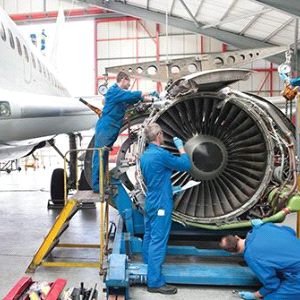
Market forecasts by MRO Type, Platform, Organisation, and Region. Country Analysis, Market and Technology Overview, Opportunities and Impact Analysis, and Leading Company Profiles