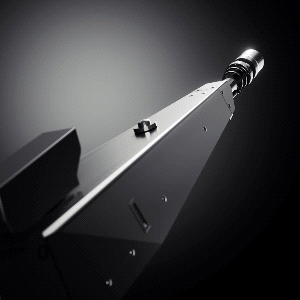
Military Counter-UAS (C-UAS) Systems - Market and Technology Forecast to 2034
Market forecast by Region, Mitigation, Domain, and Type. Country and Programme Analysis, Market and Technology Overview, Opportunity Analysis, and Leading Company Profiles
Market forecast by Region, Hull Length, and Lifecycle Phase. Country Analysis, Market and Technology Overview, Critical Raw Materials, Opportunity Analysis, and Leading Company Profiles
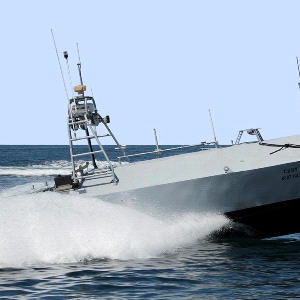
USVs represent a defining moment in the evolution of modern naval forces. Although many programs remain in the development or early production phase, Unmanned Surface Vehicles are rapidly emerging as vital assets that will reshape how navies conduct surveillance, mine countermeasures, logistics, and maritime security operations. Their rise aligns with global naval modernisation efforts, where nations are seeking flexible, cost-efficient, and casualty-free capabilities that can complement — and in some roles eventually replace — traditional manned vessels.
Our newly published study, “Unmanned Surface Vehicles (USV): Market and Technology to 2033,” finds that the USV domain is transitioning from experimental prototypes to integrated, multi-mission assets embedded within broader naval architectures. Navies are moving away from single-purpose unmanned craft toward system-of-systems models, where USVs work as collaborative nodes within distributed maritime operations. This approach enables coordinated ISR, mine-hunting, electronic warfare, and perimeter defence effects across a fleet — capabilities far beyond what standalone platforms previously offered.
This shift is being accelerated by major technological advancements. Breakthroughs in maritime autonomy, collision avoidance, sensor fusion, and power systems are enabling USVs to operate safely in contested and complex waters. At the same time, improvements in modular payload bays, open architecture standards, and interoperable command-and-control frameworks allow quick reconfiguration for diverse missions: rMCM, ASW support, logistics shuttle, drone interception, or long-endurance ISR. As autonomy stacks become more mature, USVs are increasingly capable of executing extended missions with minimal human oversight, making them indispensable in emerging naval doctrines such as distributed lethality and unmanned-manned teaming.
Industry dynamics are shifting in parallel. New technology-driven companies — specialising in autonomy, AI, sensors, and advanced materials — are now entering the market alongside traditional shipbuilders, introducing higher innovation velocity and more agile development cycles. The early practice of adapting UAS technologies for maritime use is giving way to purpose-built USV, UUV, and AUV platforms engineered specifically for hydrodynamic performance, maritime endurance, and naval mission integration. As a result, procurement strategies are evolving toward open architectures, mission modularity, and lifecycle upgradeability to keep pace with rapidly advancing technologies.
The next decade will reward companies capable of delivering integrated USV ecosystems rather than standalone boats: platforms that combine robust autonomy, secure multi-domain connectivity, modular mission payloads, and seamless fleet interoperability. As navies worldwide embrace unmanned systems to extend reach, reduce operational risk, and manage escalating costs, USVs are set to become a core pillar of future maritime warfare and coastal security operations.Complete the form below and we will send sample pages for this study. Please use a business email address.
Explore additional studies connected to this study.
Market forecast by Region, Mitigation, Domain, and Type. Country and Programme Analysis, Market and Technology Overview, Opportunity Analysis, and Leading Company Profiles
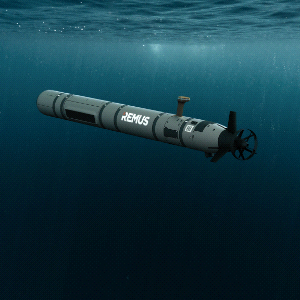
Market forecast by Region, Size, Operation Type, and Lifecycle Phase. Country Analysis, Market and Technology Overview, Critical Raw Materials, Opportunity Analysis, and Leading Company Profiles
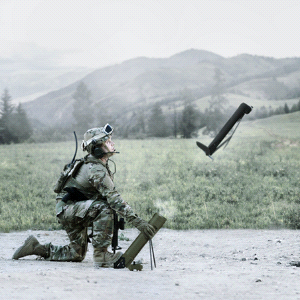
Market forecast by Region, Range, and Launch Platform. Country Analysis, Market and Technology Overview, Critical Raw Materials, Opportunity Analysis, and Leading Company Profiles
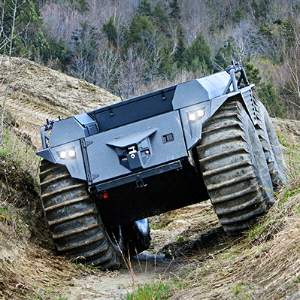
Market forecasts by Region, Application, Power Source, and Mode of Operation. Country Analysis, Market and Technology Overview, Opportunities Analysis, and Leading Company Profiles
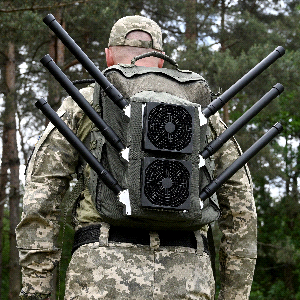
Market forecast by Region, End-User, and Mitigation Type. Country Analysis, Market and Technology Overview including Critical Raw Materials, Opportunity Analysis, and Leading Company Profiles

Market forecast by Region, Class, Type, and End-User. Country Analysis, Market and Technology Overview. Opportunities Analysis, and Leading Company Profiles