
Hypersonic Weapons - Market and Technology Forecast to 2034
Market forecasts by Region, Launch Platform and System Type. Country Analysis, Market and Technology Overview, Opportunities and Growth Analysis, and Leading Company Profiles
Market forecast by Region, Domain, Type, Lifecycle phase, and Deployment. Country Analysis, Market and Technology Overview, Critical Raw Materials, Opportunity Analysis, and Leading Company Profiles
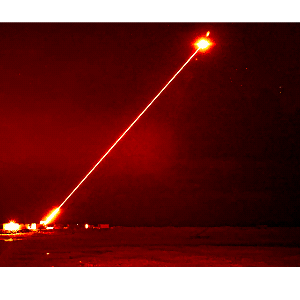
Directed Energy Weapons (DEWs) mark a significant inflexion point in the evolution of modern military capabilities, driven primarily by the changing economics and tempo of contemporary warfare. The rapid proliferation of low-cost, highly expendable threats, particularly unmanned aerial systems, loitering munitions, and rockets, has fundamentally challenged traditional kinetic air defence models that rely on costly interceptors and finite magazines. In this context, DEWs have emerged as a strategically attractive alternative, offering the promise of near-zero cost per engagement, deep magazines limited primarily by power availability, and engagement at the speed of light.
The study, “Directed Energy Weapons (DEWs) - Market and Technology to 2034,” primarily focuses on connecting directed energy weapon technologies to active defence programmes, contracts, and budgetary commitments, emphasizing their real-world adoption alongside their status as emerging technologies. It integrates technology maturity (TRLs), procurement pathways (demonstrator to LRIP/FRIP), and development plus procurement costs into its forecasts to reflect realistic deployment timelines. Most importantly, it positions DEWs as cost-exchange optimisers within layered defence architectures, offering a practical, operationally grounded perspective rather than a purely conceptual one.
Critical Raw Materials (CRMs) that are increasingly sensitive to defence and business decisions are covered, including specialised laser crystals, optical materials, and semiconductor substrates essential for high-energy lasers and microwave systems. By analysing material dependencies alongside technology and procurement, the study highlights supply-chain risk, geopolitical exposure, and industrial resilience.
This study finds that the DEW domain is transitioning from isolated experimental systems into integrated elements of wider, layered defence architectures. Armed forces are moving away from viewing lasers and microwaves as standalone niche technologies toward treating them as core components within multi-layered air and missile defence, counter-UAS, and force protection systems. In this evolving construct, DEWs operate in coordination with radars, electro-optical sensors, electronic warfare systems, command-and-control networks, and kinetic interceptors, enabling sustained engagement capacity and favourable cost-exchange dynamics that standalone systems cannot deliver.
Looking ahead, the coming decade will favour organisations capable of delivering integrated DEW ecosystems rather than standalone weapons. Success will depend on combining high-power energy sources, robust power and cooling solutions, resilient fire control and targeting, and seamless interoperability with existing air defence and command networks. As militaries seek to manage the escalating cost of missile-based defence, counter increasingly numerous low-cost threats, and sustain operations in contested environments, directed energy weapons are set to become a foundational element of future air defence, counter-UAS operations, and layered force protection architectures.
Domain
Type
Deployment
This study will benefit a wide range of stakeholders involved in the development, procurement, deployment, and commercialisation of DEWs.
Complete the form below and we will send sample pages for this study. Please use a business email address.
Explore additional studies connected to this study.
Market forecasts by Region, Launch Platform and System Type. Country Analysis, Market and Technology Overview, Opportunities and Growth Analysis, and Leading Company Profiles
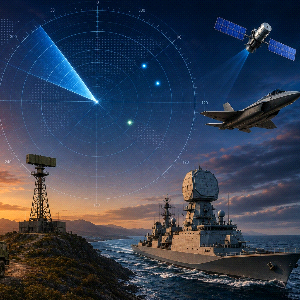
Market forecast by Region, Function, Domain, and Mobility. Country and Programme Analysis, Market and Technology Overview, Opportunity Analysis, and Leading Company Profiles
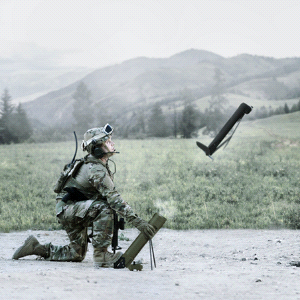
Market forecast by Region, Range, and Launch Platform. Country Analysis, Market and Technology Overview, Critical Raw Materials, Opportunity Analysis, and Leading Company Profiles
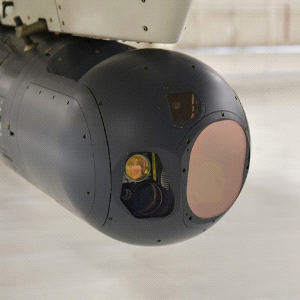
Market forecast by Region, Designator Pod, Platform, and End User. Country Analysis, Market and Technology Overview, Critical Raw Materials, Opportunity Analysis, and Leading Company Profiles
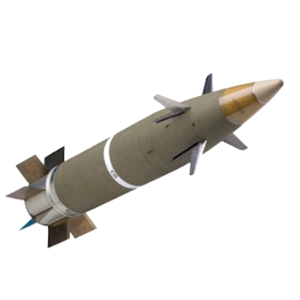
Market forecast by Regions, Calibre, Platform, and Product Format. Country Analysis, Market and Technology Overview, Critical Raw Materials, Opportunity Analysis, and Leading Company Profiles
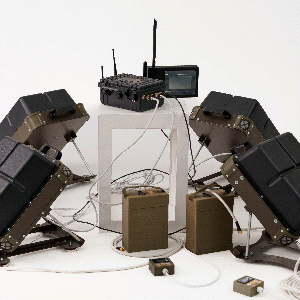
Market forecast by Regions, Platform, System, Integration, and Lifecycle Phase. Country Analysis, Market and Technology Overview, Critical Raw Materials, Opportunity Analysis, and Leading Company...