
Hypersonic Weapons - Market and Technology Forecast to 2034
Market forecasts by Region, Launch Platform and System Type. Country Analysis, Market and Technology Overview, Opportunities and Growth Analysis, and Leading Company Profiles
Market forecast by Region and Weapon System. Country Analysis, Market and Technology Overview including Critical Raw Materials, Opportunity Analysis, and Leading Company Profiles
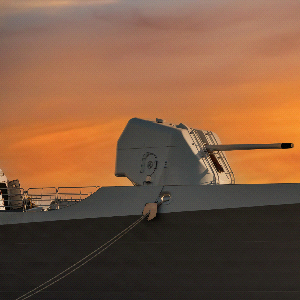
The latest high and low-intensity conflicts have shown that the range of threats that ships will need to tackle is expanding and in some cases the boundaries between high and low intensity are becoming increasingly harder to distinguish, especially with non-state actors capable of deploying advanced long-range weapons. Moreover, the use of Ukrainian unmanned surface vessels against Russian large surface units in the Black Sea and all types of attack UAVs against ships in the Red Sea, have shown that threats are evolving.
They are also used in swarms to saturate surface combat units’ defense systems but also inflict a considerable financial cost. Indeed, the market is trying to address this issue by developing laser weapons. However, until their full deployment on all vessels, naval surface units will continue to rely on conventional weapons.
The threat of a high-intensity conflict has also increased and numbers in terms of how many surface units and weapon systems can be deployed, is becoming a quality of its own. The concept of disributed lethality will remain important and will further expand with the use of unmanned surface vessels of large size, which will be capable of deploying multiple launchers.
In this threat environment, it is expected that customers will acquire new ships with enhanced firepower capabilities, including OPVs and other patrol vessels which will have to feature additional weapons compared to the past. Upgrade of older ships will continue being an important part of the market, allowing surface vessels to operate well into the future.
However, adding more weapon systems is not always feasible due to technical restrictions. Therefore, a weapon system, especially a gun will be required to carry out more tasks. We now see that new generations of naval guns are used to engage not only large surface targets, but small and fast-moving ones, or UAS and also might be needed to function as close-in weapon systems. That is only feasible thanks to the development of guided and programmable ammunition.
Our study, "Naval Weapon Systems - Market and Technology Forecast to 2033" explores how conventional naval weapon systems are being reshaped into modern, multi-domain combat solutions. It examines the technological advances being adopted by leading navies and how these transformations are influencing market dynamics and future demand, especially as global modernisation programmes take centre stage in procurement strategies.
For suppliers, aligning early with these programmes is no longer optional; it is the most decisive factor in securing long-term contracts and remaining competitive in a market where political priorities, technological leaps, and geopolitical tensions converge to influence purchasing decisions.
The study provides in-depth insights into upcoming weapon system acquisition plans, mapping out the scope, scale, and timelines of opportunities worldwide. It highlights where suppliers can align with modernisation priorities, what technologies are gaining traction, and how evolving operational doctrines are shaping the next decade of naval firepower.
The market is segmented by Region and Weapon System.
Region
Complete the form below and we will send sample pages for this study. Please use a business email address.
Explore additional studies connected to this study.
Market forecasts by Region, Launch Platform and System Type. Country Analysis, Market and Technology Overview, Opportunities and Growth Analysis, and Leading Company Profiles
Market forecast by Region, Domain, Type, Lifecycle phase, and Deployment. Country Analysis, Market and Technology Overview, Critical Raw Materials, Opportunity Analysis, and Leading Company Profiles
Market forecast by Region, Size, Operation Type, and Lifecycle Phase. Country Analysis, Market and Technology Overview, Critical Raw Materials, Opportunity Analysis, and Leading Company Profiles
Market forecast by Region, Range, and Launch Platform. Country Analysis, Market and Technology Overview, Critical Raw Materials, Opportunity Analysis, and Leading Company Profiles
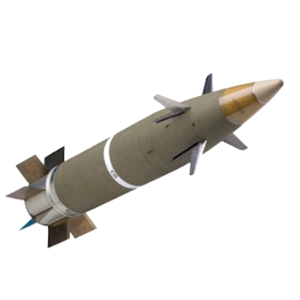
Market forecast by Regions, Calibre, Platform, and Product Format. Country Analysis, Market and Technology Overview, Critical Raw Materials, Opportunity Analysis, and Leading Company Profiles
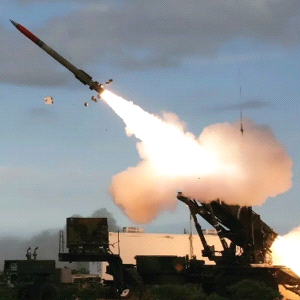
Market forecast by Regions, Types, Guidance systems, and Launch Platforms. Country Analysis, Market and Technology Overview, Critical Raw Materials, Opportunity Analysis, and Leading Company Profiles